I am a professor, serial entrepreneur, and researcher working at the intersection of information theory, machine learning, distributed systems, and trustworthy AI. As the inaugural Director of the USC-Amazon Center on Trustworthy AI, the director of the vITAL Research Lab, and co-director of Falcon AI Lab, I lead research on both the fundamental principles of AI, including trustworthiness, uncertainty, and the limits of learning, and the practical systems needed to build and deploy AI at scale. I am also the co-founder of FedML, TensorOpera AI, ChainOpera AI, and Teamily AI, building platforms that bring AI closer to people and organizations. Our philosophy is to advance the foundations and systems of AI toward intelligent technologies that are trustworthy, collaborative, and capable of amplifying human creativity, scientific discovery, and societal progress.
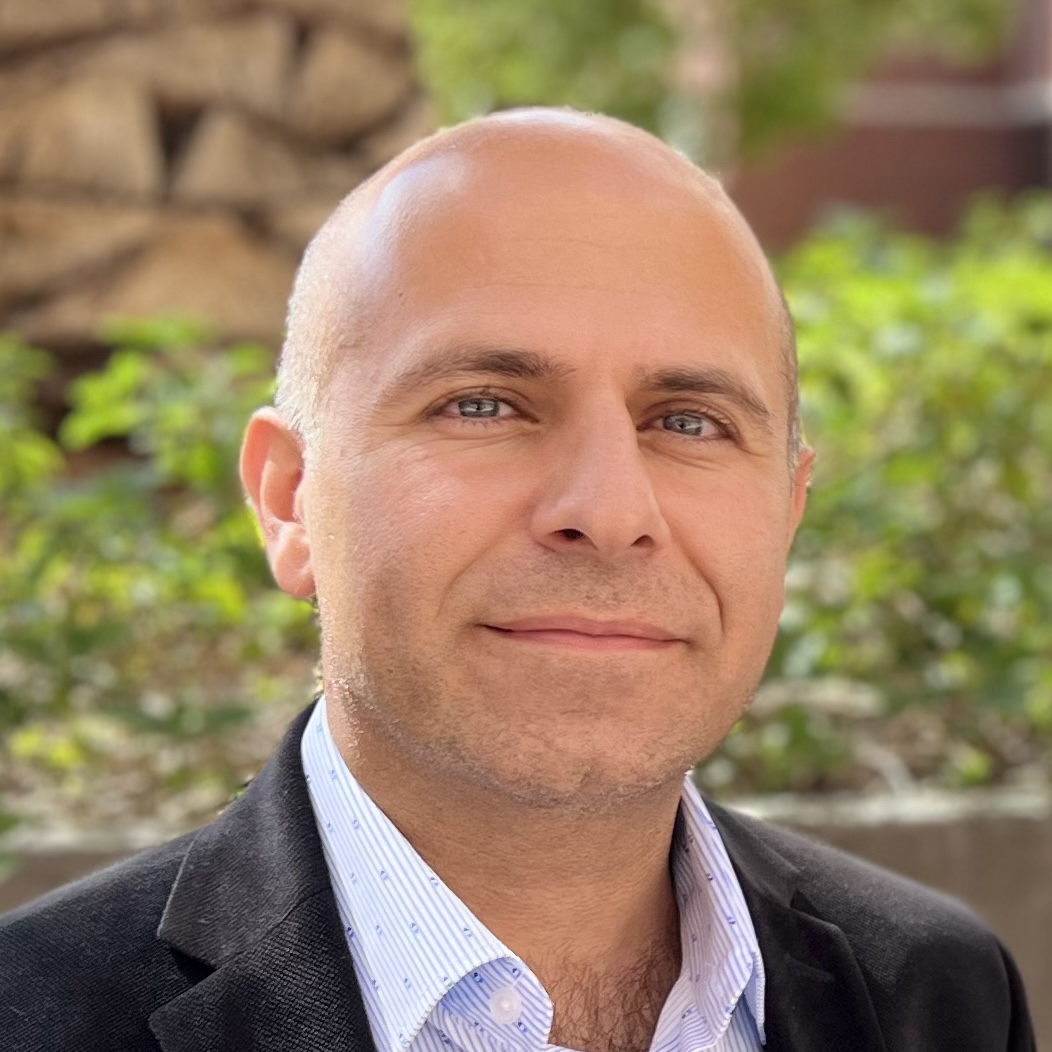
Salman Avestimehr is a Dean's Professor of Electrical and Computer Engineering and Computer Science at the University of Southern California, where he serves as the inaugural Director of the USC-Amazon Center on Trustworthy AI. He is also Founding Co-Director of Falcon AI Lab, a collaborative research hub between USC, UCI, and Stanford University for AI-driven chip and analog circuit design.
He is also a serial entrepreneur and co-founder of several leading AI initiatives, including FedML (a widely adopted open-source library for federated machine learning); TensorOpera AI (a full-stack agentic AI platform); ChainOpera AI (a decentralized AI infrastructure platform); and Teamily AI (a human-AI social platform for collaborative intelligence).
Dr. Avestimehr received his Ph.D. (2008) and M.S. (2005) in Electrical Engineering and Computer Science from the University of California, Berkeley. His research focuses on information theory, distributed and federated machine learning, and trustworthy AI systems. His work has received numerous prestigious recognitions, including the Presidential Early Career Award for Scientists and Engineers (PECASE), the James L. Massey Research & Teaching Award from the IEEE Information Theory Society, a Joint Paper Award from the IEEE Information Theory and Communication Societies, and a Young Investigator Program award from the U.S. Air Force Office of Scientific Research. He is also a recipient of the National Science Foundation CAREER Award, the David J. Sakrison Memorial Prize, and multiple best paper awards at leading conferences. Dr. Avestimehr is an IEEE Fellow.
Two decades of foundational contributions spanning information theory, distributed systems, trustworthy AI, and AI-driven scientific discovery.
Developing principled methods for quantifying uncertainty and detecting hallucinations in large language models, including semantic-aware scoring and comprehensive benchmarking.
Advancing privacy, security, and fairness in AI systems through Byzantine-resilient learning, secure aggregation, fair federated learning, and privacy-preserving computation.
Applying machine learning to fully automate analog and RF circuit design, from topology selection to layout-constrained parameter optimization and EM-aware physical synthesis. He has co-founded Falcon AI Lab as a research hub between USC, UCI, and Stanford University for this endeavor.
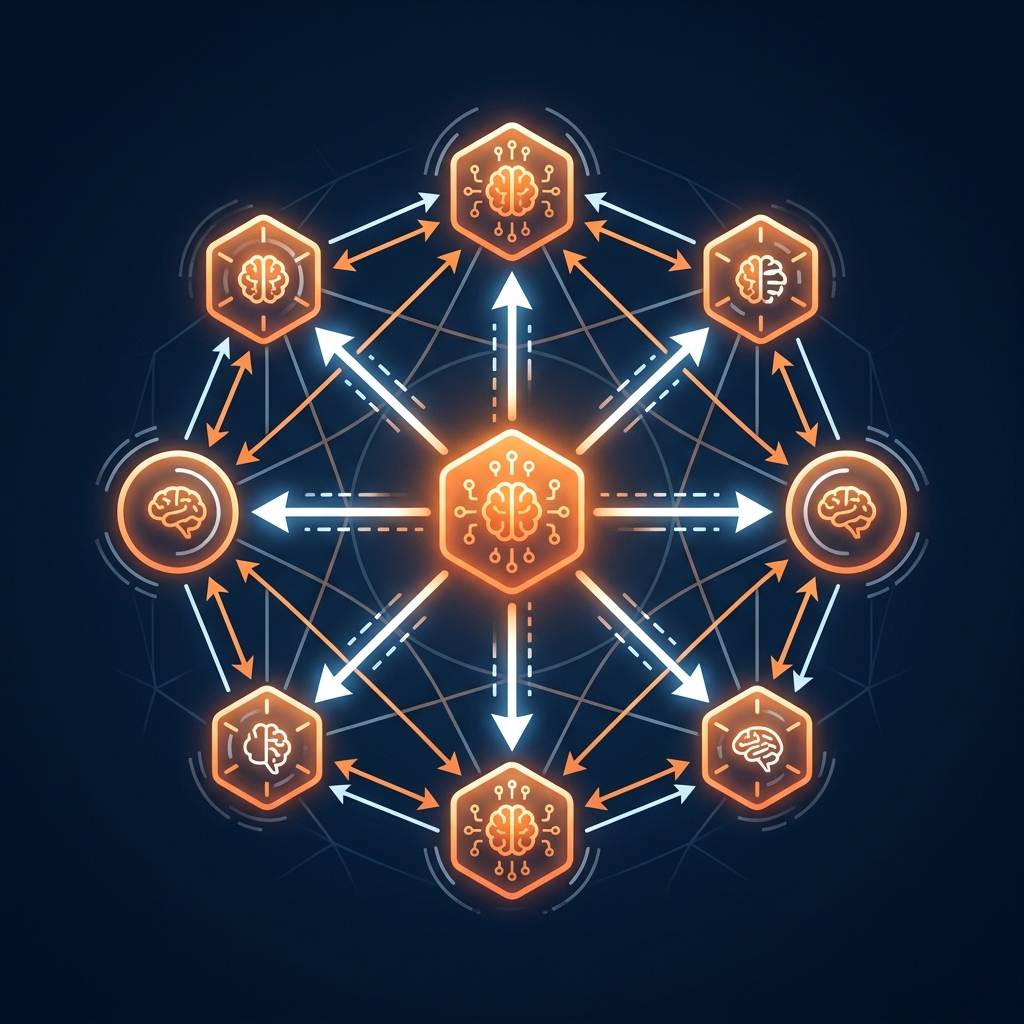
Building the foundations for collaborative AI agent networks, multi-model routing, and human-AI teaming platforms that enable scalable, trustworthy autonomous systems.
Establishing the theoretical foundations for understanding how much new knowledge AI systems can discover, using Good-Turing estimation and missing-mass analysis to derive scaling laws.
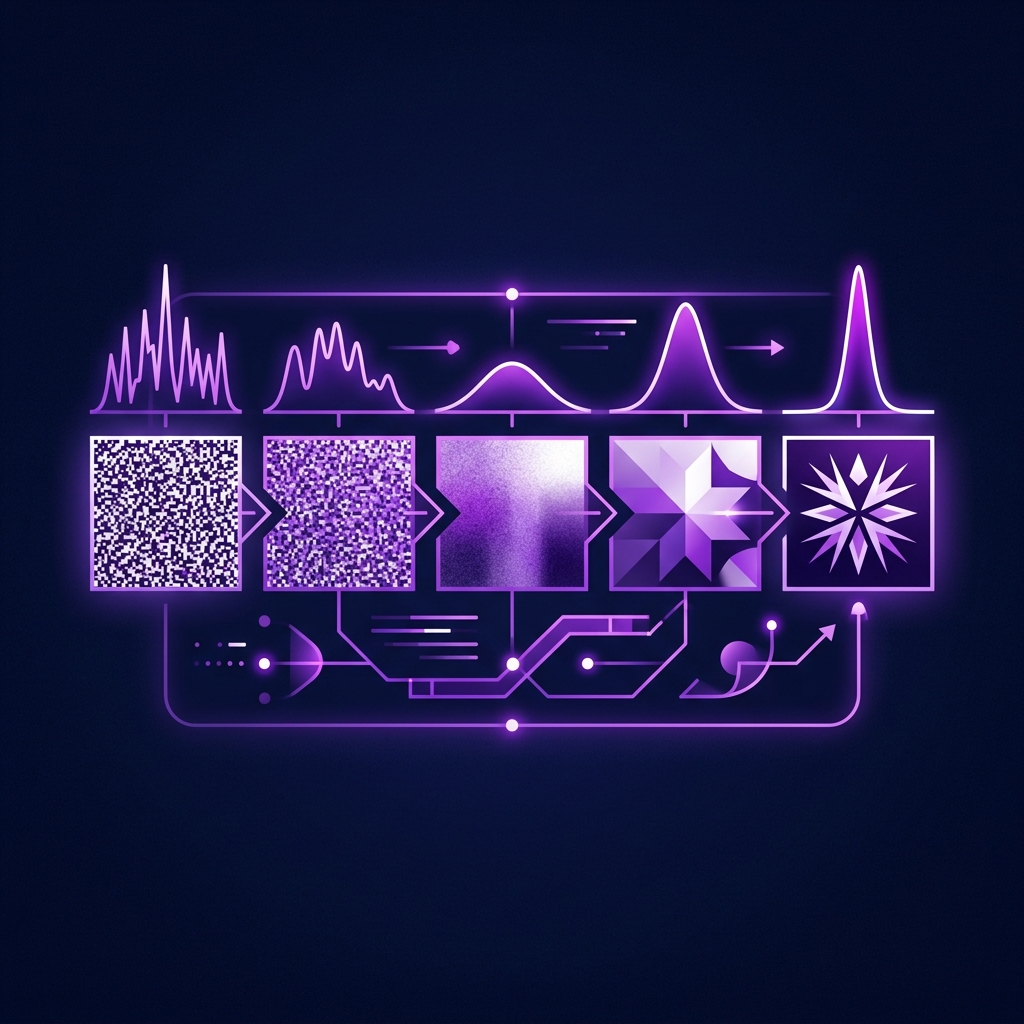
Developing efficient methods for training and serving large-scale AI models, including pipeline parallelism, federated parameter-efficient fine-tuning, and resource-constrained edge deployment.
Developed foundational frameworks for scalable, communication-efficient federated learning, including FedML (open-source library), LightSecAgg, and heterogeneous model training.
Founded the field of coded computing, using coding theory to inject computation redundancy and mitigate stragglers, communication bottlenecks, and privacy leakage in distributed systems.
Pioneered the deterministic approach to wireless network information flow, providing tractable capacity approximations for complex multi-hop, multi-flow wireless networks.
Latest research from Google Scholar, sorted by date.
arXiv preprint, 2026
IEEE BITS the Information Theory Magazine, 2026
NeurIPS 2025
arXiv preprint, 2026
AAAI 2026
Communications AI and Computing, Nature Portfolio, 2026 (Accepted)
EMNLP 2025
ACL 2025
Nature Communications, 2025
ICML 2026
12 alumni in faculty positions worldwide. Many more in industry at Google, Meta, Amazon, Microsoft, Goldman Sachs, and leading AI companies.
From research breakthroughs to real-world impact through four venture-backed companies.
The first human+AI social platform for collaborative intelligence. Teamily brings AI agent teams to human teams, enabling seamless collaboration between people and AI in a social network environment.
A full-stack agentic AI platform providing enterprise-grade AI infrastructure for building, deploying, and managing AI agents at scale. Evolved from the FedML open-source project.
A decentralized AI infrastructure platform built on blockchain Layer 1 technology, enabling trustless, scalable AI computation and model serving across distributed networks.
A widely adopted open-source library and benchmarking ecosystem for federated machine learning. With 1000+ citations, and usage by 100+ enterprises, FedML has become the standard platform for FL deployment worldwide.
2nd International Conference on Federated Learning and Intelligent Computing Systems, Valencia, Spain
Research on Deployment of Uncertainty Estimation Methods for Hallucination Detection
Federated Learning and Foundation Models Workshop at NeurIPS
IEEE Information Theory Society (as advisor to Qian Yu)
University of Southern California
For contributions to network information theory and coded computing
IEEE Information Theory Society
Information and Telecommunications
IEEE Information Theory and Communication Societies
Awarded by President Obama for outstanding contributions to science and engineering
U.S. Air Force Office of Scientific Research
National Science Foundation
Best PhD Thesis Award, UC Berkeley EECS
IEEE International Symposium on Information Theory (ISIT)